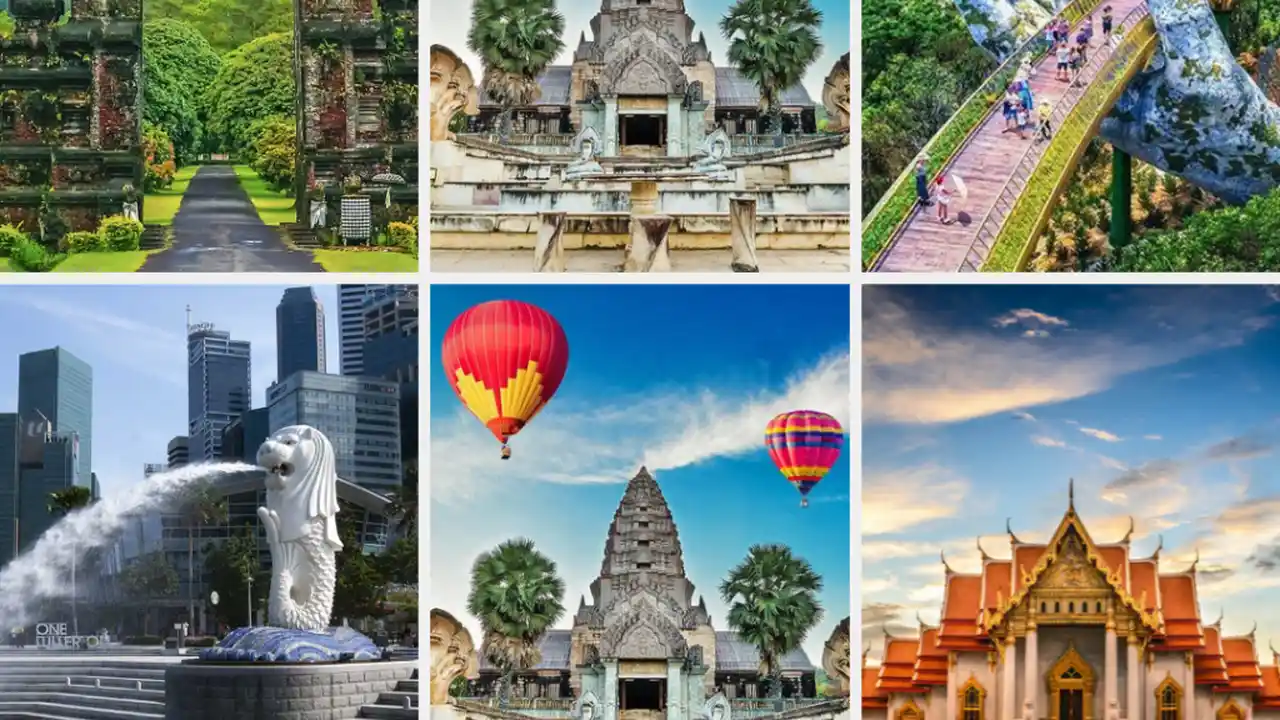
Visa Application Process for Popular Destinations
Understand the visa application process for popular international travel destinations. Essential guide for travelers.
Understand the visa application process for popular international travel destinations. Essential guide for travelers.
Visa Application Process for Popular Destinations Your Essential Guide
Hey there, fellow globetrotter! Planning an international trip is super exciting, right? You've picked your dream destination, booked your flights, and maybe even started dreaming about those Instagram-worthy photos. But hold on a sec – before you pack your bags, there's one crucial step many travelers overlook or find daunting: the visa application process. Don't let it scare you off! Getting a visa can seem complicated, but with the right information and a bit of preparation, it's totally manageable. This comprehensive guide will walk you through the visa application process for some of the most popular international travel destinations, offering practical advice, product recommendations, and comparisons to make your journey smoother.
Understanding Visa Requirements What Every Traveler Needs to Know
First things first, what exactly is a visa? Simply put, it's an official endorsement issued by the country you wish to visit, typically stamped or glued into your passport, granting you permission to enter for a specific purpose and duration. Not all countries require visas for all nationalities, and requirements can vary wildly based on your citizenship, the purpose of your visit (tourism, business, study, work), and the length of your stay. Always check the official government website of your destination country or their embassy/consulate in your home country for the most up-to-date and accurate information. Third-party sites can be helpful for general guidance, but official sources are always best.
Types of Visas Navigating Your Travel Purpose
Visas come in many flavors, each designed for a specific travel purpose:
- Tourist Visa: For leisure travel, sightseeing, and visiting friends or family. This is what most of us will be applying for.
- Business Visa: For attending conferences, meetings, or conducting business activities.
- Student Visa: For pursuing education in a foreign country.
- Work Visa: For employment in a foreign country.
- Transit Visa: Required by some countries even if you're just passing through their airport to another destination.
- Schengen Visa: A special type of short-stay visa that allows you to travel to any member country of the Schengen Area (most of Europe) for up to 90 days within a 180-day period.
General Visa Application Steps A Universal Checklist
While each country has its unique quirks, the general visa application process usually follows these steps:
- Determine if you need a visa: Use official government websites or the embassy/consulate of your destination country.
- Identify the correct visa type: Tourist, business, student, etc.
- Gather required documents: This is often the most time-consuming part.
- Complete the application form: Usually online, sometimes paper-based.
- Pay the visa fee: Non-refundable, typically.
- Schedule an interview (if required): Some countries require an in-person interview at their embassy or consulate.
- Submit your application: In person, by mail, or online.
- Wait for processing: This can take days, weeks, or even months.
- Receive your visa: Hopefully, it's approved!
Essential Documents for Visa Applications Your Preparation Toolkit
Regardless of your destination, you'll almost certainly need these core documents. Get them ready well in advance!
- Valid Passport: Most countries require your passport to be valid for at least six months beyond your intended departure date from their country, and often need at least two blank pages for stamps.
- Completed Visa Application Form: Filled out accurately and completely.
- Passport-sized Photographs: Recent, high-quality, and meeting specific size and background requirements (e.g., white background, no glasses, specific dimensions).
- Proof of Accommodation: Hotel bookings, Airbnb reservations, or a letter of invitation from a host.
- Proof of Flights: Round-trip flight itinerary or booking confirmation.
- Proof of Sufficient Funds: Bank statements, pay stubs, or a letter from your employer to show you can support yourself financially during your stay.
- Travel Insurance: Often mandatory, especially for Schengen visas.
- Itinerary: A detailed plan of your activities and places you intend to visit.
- Letter of Invitation (if applicable): From a host or business partner.
- Employment Letter/Student Enrollment: To prove your ties to your home country.
Popular Destinations and Their Visa Processes Navigating Specific Requirements
Let's dive into some specific examples of popular destinations and their typical visa requirements. Remember, these are general guidelines, and you should always verify with official sources.
Schengen Area Europe Your Gateway to 27 Countries
The Schengen Area is a group of 27 European countries that have abolished passport and all other types of border control at their mutual borders. If you're not from a visa-exempt country (like the USA, Canada, Australia, etc.), you'll need a Schengen visa to visit. This visa allows you to travel freely within the Schengen zone for up to 90 days within any 180-day period.
- Application Process: Apply at the embassy or consulate of the country where you will spend the most time, or the country of your first entry if your stay is equally divided.
- Key Documents: Passport, application form, photos, flight and accommodation bookings, travel insurance (minimum coverage of €30,000 for medical emergencies and repatriation), proof of funds, detailed itinerary.
- Processing Time: Typically 15 days, but can extend to 30-60 days during peak season or for complex cases. Apply well in advance!
- Product Recommendation: For travel insurance, providers like World Nomads or SafetyWing are popular choices for their comprehensive coverage, including medical emergencies and trip cancellation, which are often requirements for Schengen visas. World Nomads offers flexible plans for adventurous travelers, while SafetyWing is great for digital nomads and long-term travelers.
United States of America The Land of Opportunity
For most non-US citizens, a visa is required to enter the United States. The most common for tourists is the B-2 visa, or the ESTA for eligible countries under the Visa Waiver Program (VWP).
- Visa Waiver Program (ESTA): Citizens of 40 countries (e.g., UK, Australia, Japan, most Western European countries) can apply for an Electronic System for Travel Authorization (ESTA) online. This allows stays of up to 90 days for tourism or business without a traditional visa. It's much simpler and quicker than a full visa application.
- B-2 Tourist Visa: If you're not eligible for ESTA, you'll need to apply for a B-2 visa.
- Application Process (B-2): Complete the DS-160 online application form, pay the fee, schedule an interview at a US embassy or consulate, and attend the interview with all supporting documents.
- Key Documents (B-2): Passport, DS-160 confirmation page, interview appointment confirmation, photos, proof of funds, ties to home country (job, family, property), detailed itinerary.
- Processing Time (B-2): Varies greatly by embassy/consulate, from a few weeks to several months due to interview wait times. ESTA is usually approved within minutes to 72 hours.
- Product Recommendation: For ESTA applications, always use the official U.S. Customs and Border Protection (CBP) website. There are many third-party sites that charge extra fees for the same service. The official fee is currently $21.
Australia The Land Down Under
Australia has a robust electronic visa system. Most tourists will apply for an Electronic Travel Authority (ETA) or an eVisitor visa.
- ETA (Subclass 601): Available to passport holders from certain countries (e.g., USA, Canada, Japan, Singapore). It allows multiple entries for up to 12 months, with stays of up to 3 months per visit. Apply online.
- eVisitor (Subclass 651): Available to passport holders from the European Union and a few other European countries. Similar to ETA, it allows multiple entries for up to 12 months, with stays of up to 3 months per visit. Apply online.
- Visitor Visa (Subclass 600): If you're not eligible for ETA or eVisitor, or if you want to stay longer than 3 months, you'll need to apply for a Visitor Visa. This is a more comprehensive application.
- Application Process: All applications are typically done online through the Australian Department of Home Affairs website.
- Key Documents: Passport, application form, photos, proof of funds, proof of genuine visitor status (ties to home country, return flight), health requirements (medical exams may be required for longer stays or certain nationalities).
- Processing Time: ETAs and eVisitors are often processed within minutes to a few days. Visitor Visas can take several weeks to months.
- Product Recommendation: For online visa applications, ensure you use the official Australian Department of Home Affairs website. Be wary of unofficial sites that charge excessive fees.
Thailand The Land of Smiles
Thailand is known for its relatively straightforward visa policies, especially for tourists.
- Visa Exemption: Citizens of many countries (e.g., USA, UK, Canada, Australia, most EU countries) can enter Thailand without a visa for up to 30 days (or 45 days for some nationalities, check current regulations). You just need a valid passport and proof of onward travel.
- Visa on Arrival (VOA): Citizens of certain countries can obtain a Visa on Arrival for a stay of up to 15 days at designated immigration checkpoints. There's a fee involved.
- Tourist Visa (TRV): If you want to stay longer than the visa-exempt period or are not eligible for VOA, you'll need to apply for a Tourist Visa (single or multiple entry) at a Thai embassy or consulate before you travel. This typically grants a 60-day stay, extendable once.
- Application Process: For TRV, you'll usually apply in person or by mail to the Thai embassy/consulate in your home country.
- Key Documents (TRV): Passport, application form, photos, flight and accommodation bookings, proof of funds (e.g., 20,000 THB per person or 40,000 THB per family), sometimes a letter of invitation.
- Processing Time: Visa exemption is immediate upon arrival. VOA is processed at the airport. TRV can take 3-5 business days.
- Product Recommendation: For proof of onward travel, if you haven't booked your next flight, services like OnwardTicket.com or BestOnwardTicket.com allow you to rent a legitimate flight reservation for a small fee, which is then canceled after 24-48 hours. This satisfies the immigration requirement without committing to a flight you might not take.
Japan The Land of the Rising Sun
Japan is another popular destination with relatively easy visa access for many nationalities.
- Visa Exemption: Citizens of over 60 countries (e.g., USA, Canada, UK, Australia, most EU countries) can enter Japan without a visa for short-term stays (typically up to 90 days) for tourism, business, or visiting relatives.
- Temporary Visitor Visa: If you're not from a visa-exempt country, you'll need to apply for a Temporary Visitor Visa at a Japanese embassy or consulate.
- Application Process: For the Temporary Visitor Visa, you'll typically apply in person or by mail.
- Key Documents (Temporary Visitor Visa): Passport, application form, photos, flight and accommodation bookings, detailed itinerary, proof of funds, sometimes a letter of guarantee from a Japanese resident.
- Processing Time: Visa exemption is immediate. Temporary Visitor Visas usually take 5 business days, but can vary.
- Product Recommendation: For detailed itineraries, consider using travel planning apps like TripIt or Wanderlog. They help you organize all your bookings and activities in one place, making it easy to present a clear plan to visa officers if required.
Common Visa Application Challenges and How to Overcome Them Your Troubleshooting Guide
Even with careful planning, you might encounter some bumps in the road. Here's how to tackle common issues:
Incomplete or Incorrect Documentation Avoiding Rejection
This is the number one reason for visa rejections. Double-check every single requirement. Create a checklist and tick off each item as you gather it. If a document isn't applicable, provide a brief explanation. For example, if you're staying with a friend, you won't have a hotel booking, but you'll need a letter of invitation from your friend and proof of their residency.
Proof of Funds Demonstrating Financial Stability
Consulates want to ensure you won't become a burden on their country. Provide recent bank statements (usually for the last 3-6 months) showing sufficient funds. If someone else is sponsoring your trip, you'll need a sponsorship letter and their bank statements. Ensure the funds are easily accessible.
Ties to Home Country Proving You'll Return
This is crucial, especially for tourist visas. Visa officers want to be confident you'll leave their country. Provide evidence of strong ties to your home country, such as:
- Employment letter stating your position, salary, and approved leave.
- Property deeds or rental agreements.
- Family responsibilities (marriage certificate, birth certificates of children).
- Enrollment in a school or university.
Long Processing Times Planning Ahead is Key
Don't wait until the last minute! Visa processing times can be unpredictable. Always apply several months before your intended travel date, especially during peak travel seasons. Some countries offer expedited processing for an extra fee, but it's not always guaranteed.
Interview Nerves Preparing for Your Meeting
If an interview is required, dress appropriately, arrive on time, and be honest and concise in your answers. Practice answering common questions like 'Why do you want to visit?', 'What is your itinerary?', 'Who are you traveling with?', and 'How will you fund your trip?'. Bring all your original documents, even if you've submitted copies online.
Visa Application Services and Tools Streamlining Your Process
While you can often apply for visas directly, several services can help simplify the process, especially for complex applications or if you're short on time.
Visa Agencies Professional Assistance
Companies like CIBTvisas or VisaHQ specialize in visa processing. They can guide you through the requirements, review your documents, and even submit the application on your behalf. This can be a lifesaver for busy individuals or those applying for visas to multiple countries. They charge a service fee on top of the government visa fee.
- Pros: Expertise, convenience, reduced risk of errors, faster processing in some cases.
- Cons: Additional cost, you still need to gather most documents yourself.
- Use Case: Complex visa applications, multiple visas, tight deadlines, business travelers.
Online Visa Platforms Digital Solutions
For countries that offer e-visas (like Turkey, Vietnam, India for some nationalities), there are often official government portals. Be very careful to use the official government website. Many unofficial sites mimic the official ones and charge exorbitant fees for the same service. Always look for '.gov' or the official embassy/consulate domain.
- Pros: Fast, convenient, no need for in-person visits.
- Cons: Risk of using unofficial sites, requires careful attention to detail.
- Use Case: Countries offering e-visas, travelers comfortable with online applications.
Document Scanners and Organizers Digitalizing Your Paperwork
Having digital copies of all your documents is a smart move. Apps like Adobe Scan or CamScanner turn your phone into a portable scanner, allowing you to create high-quality PDFs of passports, bank statements, and other papers. Keep them organized in cloud storage (Google Drive, Dropbox) for easy access.
- Pros: Easy access, backup, convenient for online submissions.
- Cons: Requires a smartphone, need to ensure clarity of scans.
- Use Case: Every traveler for document backup and online submissions.
Comparing Visa Application Approaches DIY vs Agency
Let's weigh the options for managing your visa applications:
| Feature | DIY (Do It Yourself) | Visa Agency |
|---|---|---|
| Cost | Only government visa fees | Government fees + agency service fees (can be significant) |
| Time Commitment | High (research, gathering, filling forms, appointments) | Lower (they handle much of the legwork) |
| Expertise | Relies on your own research and understanding | Professional guidance, up-to-date knowledge of requirements |
| Error Risk | Higher if not meticulous | Lower due to professional review |
| Convenience | Less convenient, requires more effort | Highly convenient, especially for complex cases |
| Best For | Simple visa applications, budget travelers, those with ample time | Complex visas, multiple visas, busy travelers, business travel |
For a simple tourist visa to a country with straightforward requirements, DIY is often the most cost-effective. However, if you're applying for a work visa, a visa to a country with very strict rules, or need multiple visas for a multi-country trip, an agency can save you a lot of stress and potential rejections.
Final Tips for a Smooth Visa Journey Your Pre-Travel Checklist
- Start Early: This cannot be stressed enough.
- Be Meticulous: Read instructions carefully and double-check everything.
- Keep Copies: Always have digital and physical copies of all submitted documents.
- Be Honest: Provide accurate information. Misrepresentation can lead to permanent bans.
- Check Validity: Ensure your passport and any existing visas are valid for your entire trip.
- Stay Updated: Visa rules can change without much notice. Reconfirm requirements closer to your travel date.
Navigating the visa application process might seem like a hurdle, but it's a necessary step to unlock incredible travel experiences. By being prepared, organized, and informed, you can confidently secure your entry to your dream destinations. Happy travels!
:max_bytes(150000):strip_icc()/277019-baked-pork-chops-with-cream-of-mushroom-soup-DDMFS-beauty-4x3-BG-7505-5762b731cf30447d9cbbbbbf387beafa.jpg)