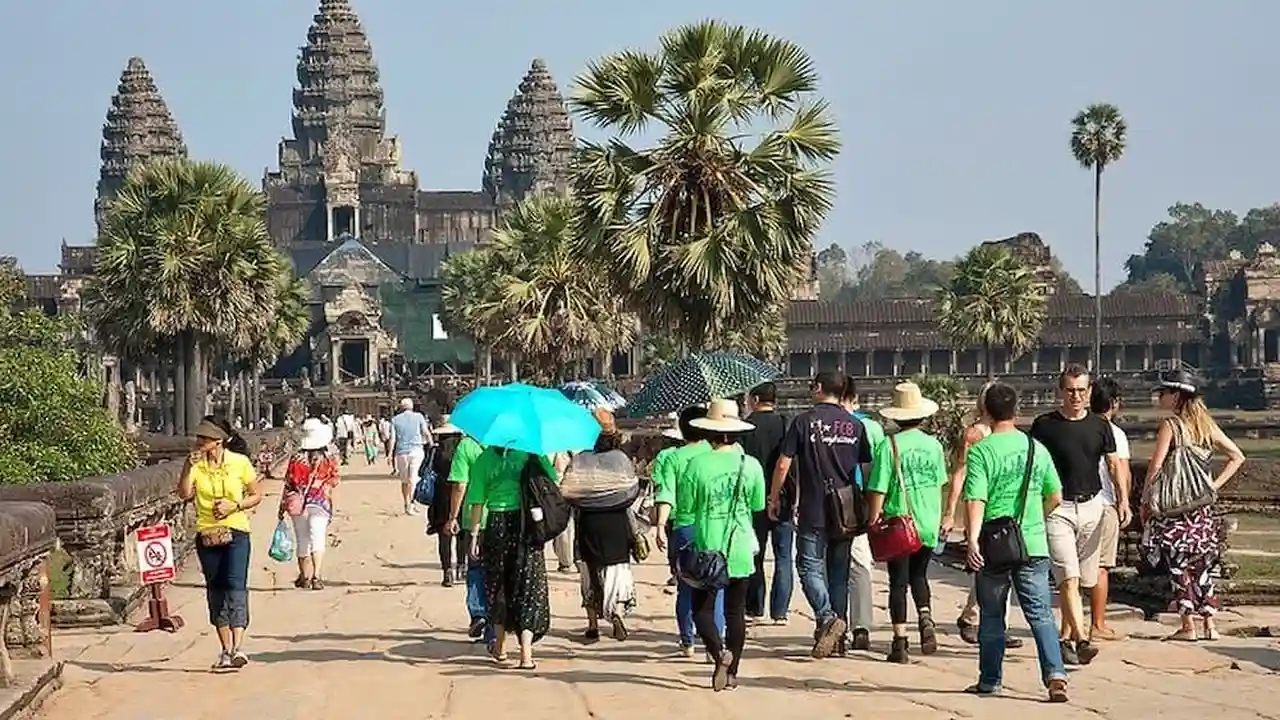
Southeast Asia Visa Requirements for Tourists
Understand the visa requirements for international visitors traveling to Southeast Asia. Essential information for your entry.

Understand the visa requirements for international visitors traveling to Southeast Asia. Essential information for your entry.
Southeast Asia Visa Requirements for Tourists Your Essential Guide
Planning a trip to the vibrant and diverse region of Southeast Asia is incredibly exciting! From the bustling streets of Bangkok to the serene beaches of Bali, there's an adventure waiting for everyone. However, before you can immerse yourself in the rich cultures and breathtaking landscapes, there's one crucial step you absolutely cannot overlook: understanding the visa requirements. Navigating the visa landscape for multiple countries can seem daunting, but with the right information, it's totally manageable. This comprehensive guide will break down the visa policies for popular Southeast Asian destinations, offer practical tips, and even recommend some services to make your application process smoother. Let's dive in!
Understanding Southeast Asia Visa Policies Key Information for Travelers
Southeast Asia is a region of ten countries, each with its own immigration laws and visa policies. While some countries offer visa-free entry for many nationalities, others require a visa in advance, or a visa on arrival. The duration of your stay, your nationality, and the purpose of your visit (tourism, business, etc.) are the main factors determining your visa needs. It's always, always best to check the most up-to-date information from the official embassy or consulate websites of the countries you plan to visit, as policies can change without much notice.
Visa Free Entry Common Scenarios for Southeast Asia Travel
Good news for many travelers! Several Southeast Asian countries offer visa-free entry for a significant number of nationalities, especially for short tourist stays. This means you can simply arrive at the airport or border crossing, get a stamp in your passport, and you're good to go. The typical visa-free stay ranges from 14 to 30 days, but it can be up to 90 days for some nationalities in certain countries.
- Thailand: Many nationalities, including those from the US, UK, Canada, Australia, and most EU countries, can enter Thailand visa-free for up to 30 days when arriving by air. If entering by land, the visa-free stay might be limited to 15 days for some.
- Vietnam: Visa-free entry is available for citizens of several countries, including the UK, France, Germany, Spain, Italy (for 15 days), and some ASEAN countries. However, for US citizens and many others, a visa is required.
- Indonesia: Most nationalities, including those from the US, UK, Canada, Australia, and EU, can enter Indonesia visa-free for up to 30 days. This is great for Bali trips!
- Malaysia: Many nationalities, including US, UK, Canada, Australia, and EU, enjoy visa-free entry for up to 90 days.
- Singapore: Similar to Malaysia, many nationalities can enter Singapore visa-free for up to 30 or 90 days.
- Philippines: Most nationalities, including US, UK, Canada, Australia, and EU, can enter visa-free for up to 30 days.
- Laos: Visa-free entry for 30 days is available for citizens of some ASEAN countries. For many Western nationalities, a Visa on Arrival (VOA) is common.
- Cambodia: Similar to Laos, visa-free entry for some ASEAN countries. For most Western nationalities, a Visa on Arrival (VOA) or eVisa is available.
- Myanmar: Visa-free entry is quite limited. Most nationalities will need a visa in advance or an eVisa.
- Brunei: Visa-free entry for many nationalities, often for 14 or 30 days.
Pro Tip: Always check the specific requirements for your nationality for each country you plan to visit. Don't assume that because you're visa-free for one, you'll be visa-free for all!
Visa on Arrival VOA Options for Southeast Asia Travelers
A Visa on Arrival (VOA) is a convenient option offered by some countries, allowing you to obtain your visa directly at the airport or border crossing upon entry. This saves you the hassle of applying in advance, but it's crucial to be prepared with the necessary documents and fees.
- Laos: Many nationalities can get a VOA at international airports (Vientiane, Luang Prabang, Pakse) and major land border crossings. You'll typically need your passport, a passport-sized photo, and a fee (around 30-40 USD, depending on nationality).
- Cambodia: VOA is widely available at international airports (Phnom Penh, Siem Reap) and land borders. Requirements are similar to Laos: passport, photo, and a fee (around 30 USD).
- Timor-Leste: For many nationalities, a VOA is available at Dili's Presidente Nicolau Lobato International Airport.
What to prepare for VOA:
- Valid Passport: Must be valid for at least 6 months beyond your intended departure date.
- Passport-sized Photos: Usually 1 or 2, recent and meeting standard passport photo specifications.
- Visa Fee: In USD, often exact change is preferred.
- Completed Application Form: Usually provided at the immigration counter.
- Proof of onward/return ticket: Sometimes requested.
- Proof of accommodation: Sometimes requested.
eVisa Electronic Visa Applications for Seamless Entry
Electronic Visas (eVisas) are becoming increasingly popular, offering a convenient way to apply for your visa online before you travel. This eliminates the need to visit an embassy or send your passport away, and you receive your visa approval via email.
- Vietnam: Vietnam offers an eVisa for citizens of 80 countries, including the US, UK, Canada, Australia, and most EU countries. It's valid for a single entry for up to 30 days. The application is done through the official Vietnam Immigration Department website.
- Cambodia: Cambodia also has an eVisa system, which is a great alternative to VOA. It's valid for a single entry for up to 30 days. Apply through the official Ministry of Foreign Affairs and International Cooperation website.
- Myanmar: Myanmar offers an eVisa for tourists and business travelers. It's valid for a single entry for up to 28 days for tourism. Apply through the official Ministry of Labour, Immigration and Population website.
- Laos: Laos recently introduced an eVisa system, which is a convenient option for many nationalities.
Benefits of eVisa:
- Convenience: Apply from anywhere with internet access.
- Time-saving: Avoid embassy visits and postal delays.
- Peace of mind: Have your visa approved before you even leave home.
Important: Always use the official government website for eVisa applications. There are many third-party sites that charge exorbitant fees and may not be legitimate. Double-check the URL!
Traditional Visa Applications When You Need to Apply in Advance
For some nationalities or for longer stays, you might need to apply for a traditional visa at the embassy or consulate of the country you wish to visit. This usually involves submitting your passport, application form, photos, and supporting documents in person or by mail.
- Vietnam: If your nationality isn't eligible for eVisa or visa-free entry, or if you need a multi-entry visa or a stay longer than 30 days, you'll likely need to apply at a Vietnamese embassy or consulate.
- Myanmar: Similar to Vietnam, if eVisa isn't an option for your specific needs, a traditional embassy application will be necessary.
- Indonesia: While many get visa-free entry, if you plan to stay longer than 30 days, you'll need to apply for a visa in advance.
General requirements for traditional visa applications:
- Valid Passport: With at least 6 months validity and often a few blank pages.
- Completed Application Form: Filled out accurately.
- Passport-sized Photos: Recent and meeting specifications.
- Visa Fee: Non-refundable.
- Flight Itinerary: Proof of onward/return travel.
- Accommodation Proof: Hotel bookings or invitation letter.
- Bank Statements: Proof of sufficient funds for your trip.
- Invitation Letter: If visiting friends/family or for business.
Specific Country Visa Guides for Popular Southeast Asia Destinations
Let's break down the visa situation for some of the most popular tourist destinations in Southeast Asia.
Thailand Visa Requirements Navigating the Land of Smiles
Thailand is a perennial favorite, and thankfully, its visa policy is quite traveler-friendly for many. Most Western nationalities (US, UK, Canada, Australia, EU) can enter Thailand visa-free for 30 days when arriving by air. If you plan to stay longer, or if your nationality isn't eligible for visa-free entry, you'll need to apply for a Tourist Visa in advance.
- Visa Exemption (30 days): For air arrivals, extendable once for another 30 days at an immigration office (fee applies). Land border entries might be limited to 15 days for some.
- Tourist Visa (TRV): Apply at a Thai embassy/consulate in your home country. Typically grants a 60-day stay, extendable once for another 30 days.
- Multiple Entry Tourist Visa (METV): Allows multiple entries within a 6-month period, with each stay not exceeding 60 days. This is for those planning multiple trips in and out of Thailand.
Key documents for Thai Tourist Visa: Passport, application form, photos, flight itinerary, accommodation proof, bank statement, visa fee.
Vietnam Visa Requirements Exploring the Dragon Land
Vietnam's visa policy has become much easier with the introduction of the eVisa. However, it's still a country where many nationalities do need a visa.
- eVisa (30 days, single entry): Available for 80 nationalities. Apply online through the official Vietnam Immigration Department portal. Processing usually takes 3 working days.
- Visa Exemption (15 days): For citizens of the UK, France, Germany, Spain, Italy, and a few others. This is a great option for short trips.
- Traditional Visa: If you need a multi-entry visa, a longer stay, or if your nationality isn't eligible for eVisa/exemption, you'll need to apply at a Vietnamese embassy or consulate.
Important: If you use the eVisa, make sure your entry and exit points match those on your eVisa approval letter. Also, if you're doing a land crossing, ensure that specific border gate is listed as an eVisa entry point.
Indonesia Visa Requirements Bali and Beyond
Indonesia, home to Bali, is very welcoming to tourists with its visa-free policy for many.
- Visa Exemption (30 days): For citizens of over 160 countries, including US, UK, Canada, Australia, EU. This cannot be extended.
- Visa on Arrival (VOA) (30 days): For nationalities not eligible for visa exemption, or if you want the option to extend your stay. The VOA costs around 35 USD and can be extended once for another 30 days at an immigration office.
- Traditional Visa: For stays longer than 60 days, you'll need to apply for a specific visa (e.g., a 60-day tourist visa) at an Indonesian embassy or consulate before you travel.
Tip for Bali: If you think you might want to stay longer than 30 days, get the VOA instead of relying on the visa exemption. It gives you the flexibility to extend.
Cambodia Visa Requirements Exploring Ancient Wonders
Cambodia offers straightforward visa options for most tourists.
- Visa on Arrival (VOA) (30 days): Available at international airports (Phnom Penh, Siem Reap) and major land border crossings. Costs around 30 USD.
- eVisa (30 days, single entry): A convenient online option. Apply through the official Ministry of Foreign Affairs and International Cooperation website. Costs around 36 USD (including processing fee).
- Visa Exemption: For citizens of some ASEAN countries.
Recommendation: The eVisa is often preferred as it speeds up your entry process upon arrival, especially at busy airports like Siem Reap.
Laos Visa Requirements The Land of a Million Elephants
Laos is another country where a Visa on Arrival is a common and easy option.
- Visa on Arrival (VOA) (30 days): Available at international airports (Vientiane, Luang Prabang, Pakse) and major land border crossings. Costs around 30-40 USD depending on nationality.
- eVisa (30 days, single entry): Laos has recently launched an eVisa system, which is a great alternative to VOA. Check the official Laos eVisa website for eligibility.
- Visa Exemption: For citizens of some ASEAN countries.
What to bring for Laos VOA: Passport, one passport-sized photo, and the visa fee in USD.
Essential Documents and Preparation for Your Southeast Asia Visa Application
Regardless of whether you need a visa-free entry, VOA, eVisa, or a traditional visa, certain documents are almost universally required. Being prepared will save you a lot of stress!
Passport Validity and Blank Pages Your Travel Foundation
This is probably the most critical requirement. Your passport must be valid for at least 6 months beyond your intended departure date from the last country you visit in Southeast Asia. Many airlines won't even let you board if your passport doesn't meet this criterion. Also, ensure you have enough blank pages for entry and exit stamps, and any visa stickers. A good rule of thumb is at least two blank pages per country you plan to visit.
Passport Photos Meeting International Standards
For VOA and traditional visa applications, you'll almost certainly need passport-sized photos. These usually need to be recent (within 6 months), with a white background, and adhere to standard passport photo dimensions (e.g., 2x2 inches for US, 35x45mm for others). It's a good idea to carry a few extra copies, just in case.
Proof of Onward Travel and Accommodation Showing Your Plans
Immigration officials often want to see proof that you intend to leave their country and that you have a place to stay. This could be:
- Flight Itinerary: A confirmed flight ticket showing your departure from the country.
- Bus/Train Tickets: If you're traveling overland to another country.
- Hotel Bookings: For at least your first few nights, or for the duration of your stay.
- Invitation Letter: If you're staying with friends or family.
Having these documents printed out or easily accessible on your phone is a smart move.
Sufficient Funds Demonstrating Financial Capability
Some countries may ask for proof that you have enough money to support yourself during your stay. This is usually to ensure you won't become a burden on the state. A recent bank statement or credit card statement can serve as proof. There isn't always a strict amount, but showing you have a few hundred to a thousand dollars for a typical trip is usually sufficient.
Travel Insurance Protecting Your Journey
While not always a strict visa requirement, travel insurance is highly recommended for any international trip, especially to Southeast Asia. It covers medical emergencies, trip cancellations, lost luggage, and more. Some countries might even make it mandatory in the future, so it's good practice to have it. We'll talk about specific recommendations later!
Common Pitfalls and How to Avoid Visa Headaches in Southeast Asia
Even with all the information, mistakes can happen. Here's how to steer clear of common visa problems.
Overstaying Your Visa The Consequences
This is a big no-no. Overstaying your visa, even by a day, can lead to hefty fines, detention, deportation, and even a ban from re-entering the country. Always keep track of your entry stamp and visa expiry date. Set reminders on your phone if you need to!
Using Unofficial Visa Services The Risks
As mentioned, for eVisas, always use the official government website. Many third-party sites pop up in search results that look legitimate but charge significantly more and sometimes even provide incorrect information or invalid visas. Stick to .gov or official embassy sites.
Incorrect Information on Application Forms Accuracy is Key
Double-check, triple-check all the information you provide on your visa application. Even a small typo in your name or passport number can lead to your application being rejected or issues at immigration. Ensure your passport number, date of birth, and full name match exactly what's on your passport.
Not Having Enough Blank Passport Pages A Simple Oversight
It sounds minor, but arriving with a full passport can cause serious delays or even denial of entry. Make sure you have enough blank pages before you leave home.
Last Minute Visa Applications The Stress Factor
Don't leave your visa application until the last minute. Processing times can vary, and unexpected delays can occur. Apply well in advance, especially for traditional visas, to avoid unnecessary stress.
Recommended Tools and Services for Streamlined Visa Applications
To make your visa application process as smooth as possible, here are some tools and services that can help.
Visa Processing Services For Complex Applications
If you have a complex itinerary, multiple visas to apply for, or simply want to offload the administrative burden, a reputable visa processing service can be a lifesaver. These services handle the entire application process for you, from reviewing documents to submitting them to the embassy.
- CIBTvisas (Travisa): This is one of the largest and most well-known visa and passport service agencies globally. They handle visas for almost every country and offer various processing speeds.
- Pros: Expertise in complex cases, expedited processing options, document review, customer support.
- Cons: Can be expensive, especially for expedited services.
- Use Case: Ideal for travelers with tight deadlines, those needing visas for multiple countries, or business travelers who need specific visa types.
- Estimated Cost: Service fees typically range from $99 to $300+ per visa, in addition to government fees.
Online Passport Photo Services Getting it Right Every Time
Getting passport photos that meet strict government requirements can be tricky. Online services ensure your photos are compliant.
- Passport Photo Online: This service allows you to upload a photo from your phone, and it will crop, resize, and ensure it meets the specific requirements for various countries. You can then print them at home or a local store.
- Pros: Convenient, ensures compliance, cost-effective.
- Cons: Requires you to take a decent initial photo.
- Use Case: Perfect for anyone needing passport photos for VOA or traditional applications without leaving home.
- Estimated Cost: Around $5-10 for digital files, plus printing costs.
Travel Insurance Providers Comprehensive Coverage for Peace of Mind
As mentioned, travel insurance is crucial. Here are a couple of highly-rated providers:
- World Nomads: Very popular among backpackers and adventure travelers. They offer comprehensive plans that cover a wide range of activities, including many adventure sports.
- Pros: Excellent coverage for medical emergencies, trip cancellation, lost luggage, and adventure activities. Easy online claims process.
- Cons: Can be slightly more expensive than basic plans.
- Use Case: Essential for anyone planning active or adventurous trips in Southeast Asia, or those who want robust coverage.
- Estimated Cost: Varies greatly based on trip duration, age, and coverage level, but expect $100-$300+ for a multi-week trip.
- SafetyWing: Designed for digital nomads and long-term travelers, offering a subscription-based travel medical insurance.
- Pros: Flexible, affordable, covers home country visits (for every 90 days abroad), good for long-term trips.
- Cons: More focused on medical than comprehensive trip cancellation.
- Use Case: Ideal for long-term travelers, digital nomads, or those on extended stays in Southeast Asia who need continuous medical coverage.
- Estimated Cost: Around $45-50 per 4 weeks.
Flight Search Engines for Onward Travel Proof Booking Smart
Having proof of onward travel is often a visa requirement. These tools help you find flexible or affordable options.
- Skyscanner: Great for finding the cheapest flights and exploring different departure/arrival dates. You can search 'Everywhere' to see cheap flights out of a country if you're unsure of your next destination.
- Pros: Comprehensive search, flexible date options, price alerts.
- Cons: Sometimes redirects to third-party sites with less flexible booking conditions.
- Use Case: Finding affordable onward flights to satisfy visa requirements.
- Kayak: Similar to Skyscanner, offering flight, hotel, and car rental searches. Their 'Explore' feature can also be useful for finding onward destinations.
- Pros: Good for comparing prices across multiple airlines and OTAs.
- Cons: Can be overwhelming with too many options.
- Use Case: Comparing prices for specific onward flights.
Accommodation Booking Platforms Securing Your Stay
Proof of accommodation is often requested. These platforms are your go-to.
- Booking.com: Offers a vast selection of hotels, guesthouses, and apartments. Many bookings offer free cancellation, which is great if your plans are still fluid.
- Pros: Huge inventory, good filtering options, often free cancellation.
- Cons: Can be slightly more expensive than direct bookings sometimes.
- Use Case: Booking initial accommodation for visa applications, or flexible bookings for uncertain itineraries.
- Agoda: Particularly strong in Asia, often offering competitive prices for hotels and resorts in Southeast Asia.
- Pros: Excellent coverage in Asia, often has exclusive deals.
- Cons: Cancellation policies can be stricter than Booking.com for some properties.
- Use Case: Finding great deals on hotels across Southeast Asia.
Staying Informed and Flexible Your Best Visa Strategy
The world of international travel, especially concerning visas, is constantly evolving. Policies can change due to political situations, health crises, or simply updated regulations. Therefore, your best strategy is to stay informed and remain flexible.
Official Government Websites Your Primary Source of Truth
Always, always, always refer to the official embassy or consulate websites of the countries you plan to visit. These are the most accurate and up-to-date sources of information. Look for the immigration or consular services section. Don't rely solely on travel blogs or forums, as information can quickly become outdated.
Embassy and Consulate Contact Information When in Doubt
If you have specific questions about your unique situation, or if the information online is unclear, don't hesitate to contact the embassy or consulate of the country you're visiting in your home country. They are there to help and provide official guidance.
Flexibility in Travel Plans Adapting to Changes
Sometimes, despite your best efforts, visa policies might change unexpectedly. Having some flexibility in your travel dates or even your itinerary can be a huge advantage. Consider booking flights and accommodations with flexible cancellation policies, especially if you're applying for a visa that might take longer than expected.
Keep Copies of Everything Digital and Physical
Make digital copies (photos on your phone, cloud storage) and physical photocopies of your passport, visa, flight tickets, accommodation bookings, and travel insurance. Keep these separate from your originals. If you lose your passport, having these copies will significantly speed up the replacement process.
Navigating Southeast Asia's visa requirements doesn't have to be a headache. By understanding the different types of visas, preparing your documents in advance, and utilizing reliable services, you can ensure a smooth entry into these incredible countries. Happy travels!
:max_bytes(150000):strip_icc()/277019-baked-pork-chops-with-cream-of-mushroom-soup-DDMFS-beauty-4x3-BG-7505-5762b731cf30447d9cbbbbbf387beafa.jpg)