Comparing Guided Tours vs Independent Exploration
Decide between guided cultural tours and independent exploration. Weigh the benefits of each travel style.
Decide between guided cultural tours and independent exploration. Weigh the benefits of each travel style.
Comparing Guided Tours vs Independent Exploration
So, you've got that travel bug, huh? You're dreaming of ancient ruins, bustling markets, and delicious street food. But then the big question hits: should you join a guided tour or strike out on your own? It's a classic travel dilemma, and honestly, there's no single right answer. Both guided tours and independent exploration offer unique advantages and disadvantages, and the best choice really depends on your personality, your travel goals, and even the destination itself. Let's dive deep into this, comparing everything from cost to cultural immersion, so you can make the most informed decision for your next adventure.
Guided Tours The Structured Approach to Travel
Guided tours often get a bad rap, conjuring images of flag-waving leaders and rigid schedules. But modern guided tours are far more diverse and sophisticated than that. They can range from large bus tours to small group adventures, specialized cultural immersions, or even private bespoke experiences. The core appeal, however, remains the same: convenience and expertise.
Benefits of Guided Tours Convenience and Expertise
One of the biggest draws of a guided tour is the sheer convenience. All the planning – flights, accommodations, transportation, activities, and even some meals – is handled for you. This is a huge relief for travelers who are short on time, dislike planning, or feel overwhelmed by the logistics of international travel. Imagine landing in a new country, and instead of figuring out how to get to your hotel, a friendly face is there to whisk you away. That's the guided tour experience.
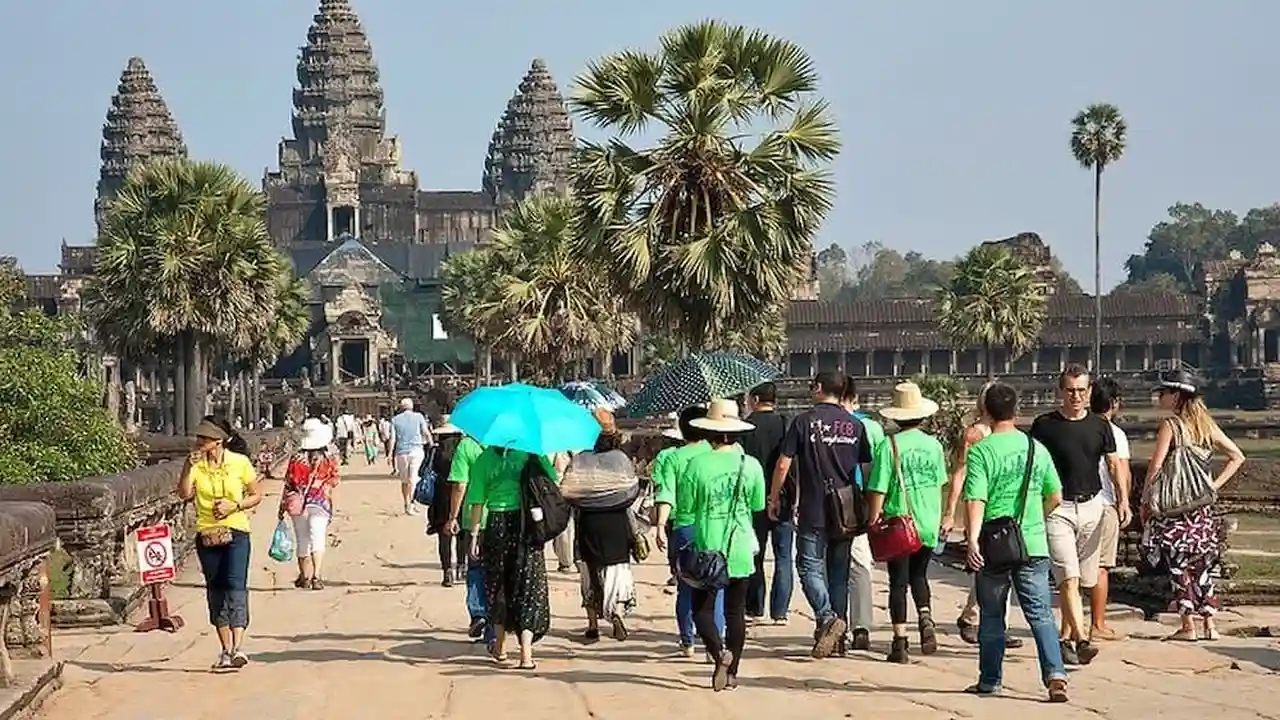
Then there's the expertise. Tour guides are often locals or seasoned travelers with deep knowledge of the destination. They can provide historical context, cultural insights, and local anecdotes that you might never discover on your own. They know the best photo spots, the hidden gems, and how to navigate cultural nuances. This can significantly enrich your understanding and appreciation of a place. For example, when visiting a complex historical site like the Colosseum in Rome or Angkor Wat in Cambodia, a good guide can bring the stones to life with stories and facts, making the experience far more meaningful than simply reading a plaque.
Safety and security are also major factors, especially for solo travelers or those visiting less familiar regions. Tour companies often have established networks and protocols to handle emergencies, and traveling in a group can offer a sense of security. Plus, guides can help bridge language barriers, making interactions with locals much smoother.
Drawbacks of Guided Tours Cost and Flexibility
Of course, convenience and expertise come at a price. Guided tours are generally more expensive than independent travel. You're paying for the planning, the guide's salary, transportation, and often a premium for pre-booked attractions and accommodations. While some budget tours exist, independent travel almost always offers more opportunities to save money.
Another common complaint is the lack of flexibility. You're tied to a schedule, and spontaneous detours or lingering longer at a favorite spot might not be an option. If you're someone who loves to wander off the beaten path, discover things by chance, or simply wake up and decide what you want to do that day, a rigid tour itinerary can feel restrictive. You might also find yourself spending time on activities or visiting places that don't particularly interest you, simply because they're part of the package.
Group dynamics can also be a hit or miss. While you might make lifelong friends, you could also end up with personalities that clash, or a group that moves at a different pace than you'd prefer. This can impact your overall enjoyment of the trip.
Independent Exploration The Freedom of the Open Road
Independent travel, often called backpacking or self-guided travel, is all about freedom and self-reliance. You're the captain of your own ship, charting your course, making your own decisions, and embracing the unexpected.
Benefits of Independent Exploration Freedom and Authenticity
The ultimate benefit of independent travel is unparalleled freedom. You decide where to go, when to go, how long to stay, and what to do. Want to spend an entire day people-watching in a Parisian cafe? Go for it. Feel like spontaneously hopping on a train to a town you just heard about? No problem. This level of autonomy allows for truly personalized experiences and the chance to follow your own interests and curiosities.
Independent travel also often leads to more authentic and immersive experiences. Without a guide buffering your interactions, you're more likely to engage directly with locals, navigate public transport, and discover local eateries away from tourist traps. This can lead to deeper cultural understanding and more memorable encounters. You learn to problem-solve on the fly, adapt to new situations, and develop a greater sense of self-reliance, which can be incredibly rewarding.
Cost savings are another significant advantage. By choosing your own accommodations (hostels, guesthouses, Airbnb), eating where locals eat, and utilizing public transportation, you can often travel for a fraction of the cost of a guided tour. This makes longer trips more feasible and allows you to stretch your budget further.
Drawbacks of Independent Exploration Planning and Potential Challenges
The flip side of freedom is responsibility. Independent travel requires significant planning and research. You're responsible for booking everything, figuring out transportation, understanding local customs, and navigating potential challenges. This can be time-consuming and, for some, stressful. If you're not a natural planner or enjoy having things organized for you, this aspect can be daunting.
You might also encounter more challenges. Language barriers can be more pronounced, getting lost is a real possibility, and dealing with unexpected issues like missed connections or minor emergencies falls squarely on your shoulders. While these challenges can lead to growth and memorable stories, they can also be frustrating and, at times, overwhelming.
Safety can also be a greater concern, especially in certain regions or for solo travelers. Without the built-in support system of a tour group, you need to be more vigilant and rely on your own judgment and research to stay safe.
Hybrid Approaches The Best of Both Worlds
What if you want some structure but also some freedom? Good news! There are plenty of hybrid approaches that blend elements of guided tours and independent travel.
Day Tours and Excursions Adding Structure to Independent Travel
Many independent travelers opt to book day tours or short excursions within a larger self-planned trip. This allows you to handle your main transportation and accommodation independently but join a guided group for specific activities where expertise is particularly valuable. For instance, you might explore a city on your own but book a guided food tour to discover local culinary delights, or a guided hike to a remote natural wonder. This gives you the benefit of a guide's knowledge for specific experiences without committing to a full tour itinerary.
Small Group Tours and Adventure Travel More Flexible Guided Options
If large bus tours aren't your thing, consider small group tours or adventure travel companies. These often cater to more niche interests, have smaller group sizes, and offer more flexibility within the itinerary. Companies like G Adventures or Intrepid Travel specialize in immersive, responsible travel experiences with a focus on local interaction and authentic encounters, often with a good balance of planned activities and free time. They handle the major logistics but still allow for a sense of adventure and personal discovery.
Choosing Your Travel Style Key Considerations
To help you decide, ask yourself these questions:
- What's your budget? If saving money is a top priority, independent travel usually wins.
- How much time do you have for planning? If you're short on time or dislike planning, a guided tour can be a lifesaver.
- How comfortable are you with the unknown? Independent travel requires a higher tolerance for uncertainty and problem-solving.
- What kind of experience are you seeking? Deep cultural immersion and spontaneity often lean towards independent travel, while comprehensive sightseeing and learning from experts might favor a tour.
- Are you traveling solo, with family, or friends? Solo travelers might appreciate the built-in companionship and safety of a tour, while families might find the logistics of a tour easier.
- What's the destination like? Some destinations (e.g., remote areas with limited infrastructure or countries with significant language barriers) might be easier to navigate with a tour.
Specific Product Recommendations for Both Travel Styles
Let's get into some concrete examples of how different 'products' or services cater to these travel styles, including their typical use cases, comparisons, and general pricing.
For Guided Tours Structured and Supportive Travel
1. Trafalgar Tours Premium Guided Vacations
Use Case: Ideal for travelers who want a comprehensive, hassle-free experience with a focus on comfort and well-known attractions. Often popular with older travelers or those new to international travel. They handle all logistics, including accommodation, transport, and many meals, with expert local guides.
Comparison: Trafalgar is known for its higher-end, more traditional tour experience. They often use 4-star hotels, provide luxury coach travel, and include many 'sightseeing' activities. Compared to budget tour operators, they offer more inclusions and a smoother experience, but at a higher price point. They are less about 'adventure' and more about 'sightseeing and comfort.'
Pricing: Typically ranges from $2,000 - $6,000+ USD per person for a 7-14 day tour, depending on the destination and inclusions. This usually covers accommodation, transport, some meals, and entrance fees.
2. G Adventures Small Group Adventure Travel
Use Case: Perfect for younger, more adventurous travelers, solo travelers, or those seeking a more immersive and authentic experience. G Adventures focuses on small groups, local interactions, and responsible travel. They often use local transport, stay in locally owned accommodations, and include unique activities like homestays or community projects.
Comparison: G Adventures is a stark contrast to Trafalgar. While Trafalgar offers comfort and convenience, G Adventures prioritizes cultural immersion and adventure. Their tours are more physically active and less luxurious, but offer a deeper connection to the destination. They are often compared to Intrepid Travel, offering similar styles of small group, responsible adventure travel.
Pricing: Generally ranges from $1,000 - $4,000 USD per person for a 7-14 day tour. This covers basic accommodation, transport, some activities, and a tour leader. Flights and many meals are usually extra, allowing for more budget flexibility.
3. Context Travel In-Depth Cultural Tours
Use Case: For intellectually curious travelers who want deep dives into specific subjects like art history, architecture, or local cuisine. Context Travel offers small group (usually 6-8 people) walking tours led by scholars and experts. These are often day tours or multi-day 'seminars' rather than full-package vacations.
Comparison: Context Travel is highly specialized and focuses on intellectual enrichment rather than broad sightseeing. They are much more expensive per day than typical guided tours but offer unparalleled depth of knowledge. They are not for those looking for a budget option or a comprehensive travel package, but rather for those seeking specific, high-quality learning experiences.
Pricing: Day tours can range from $100 - $300+ USD per person. Multi-day programs can be significantly more, often $1,000 - $3,000+ USD for a few days, excluding accommodation and main meals.
For Independent Exploration Tools and Services for Self-Guided Adventures
1. Booking.com Comprehensive Accommodation Platform
Use Case: Essential for independent travelers to find and book a wide range of accommodations, from hostels and guesthouses to hotels and apartments, worldwide. It offers extensive filters, reviews, and often flexible cancellation policies.
Comparison: Booking.com is one of the largest and most user-friendly platforms. It competes with Airbnb (for unique stays and apartments), Hotels.com (for hotel loyalty programs), and Hostelworld (specializing in hostels). Booking.com's strength lies in its vast inventory and user reviews, making it a go-to for most independent travelers.
Pricing: Varies wildly based on destination, accommodation type, and season. Hostels can be $15-50 USD/night, guesthouses $30-100 USD/night, and hotels $80-300+ USD/night.
2. Skyscanner Flight Search Engine
Use Case: A powerful tool for finding the cheapest flights by comparing prices across hundreds of airlines and online travel agencies. It's great for flexible travelers who can adjust their dates or even destinations to find the best deals.
Comparison: Skyscanner is similar to Google Flights, Kayak, and Momondo. Its 'Everywhere' search feature and flexible date options often give it an edge for budget-conscious travelers. It's a meta-search engine, meaning it doesn't sell tickets directly but redirects you to the airline or OTA.
Pricing: Free to use. Flight prices vary immensely, from $50 USD for short regional flights to $1,000+ USD for long-haul international routes.
3. Rome2rio Multi-Modal Transportation Planner
Use Case: Invaluable for planning how to get from point A to point B using various modes of transport (flights, trains, buses, ferries, driving). It provides estimated travel times, costs, and links to booking sites, making complex journeys much easier to plan.
Comparison: While Google Maps is great for local navigation, Rome2rio excels at inter-city and international travel planning across different transport types. It's a unique tool that aggregates information from many sources, saving independent travelers hours of research.
Pricing: Free to use. The cost of transportation itself varies greatly, from a few dollars for a local bus to hundreds for long-distance trains or flights.
4. Airalo eSIM Store for Global Connectivity
Use Case: Essential for staying connected while traveling independently without relying on expensive roaming or hunting for local SIM cards. Airalo offers eSIMs for hundreds of countries, allowing you to buy data plans digitally and activate them instantly on compatible phones.
Comparison: Airalo is a leader in the eSIM market, competing with other eSIM providers like Holafly or Nomad. Its strength lies in its wide country coverage and user-friendly app. It's a more convenient and often cheaper alternative to physical local SIM cards, especially for short trips or multi-country itineraries.
Pricing: Data plans vary by country and data allowance. For example, a 1GB plan for 7 days in Southeast Asia might cost $5-10 USD, while a 5GB plan for 30 days in Europe could be $20-30 USD.
5. Klook Activities and Experiences Booking Platform
Use Case: For independent travelers who want to book specific activities, tours, or attraction tickets in advance. Klook offers a vast selection of experiences, often at discounted prices, and allows for easy mobile booking and e-tickets.
Comparison: Klook is similar to GetYourGuide and Viator. It's particularly strong in Asia but has expanded globally. It allows independent travelers to add structured activities to their self-planned trips, getting the best of both worlds. You can book anything from theme park tickets to cooking classes or even airport transfers.
Pricing: Varies widely depending on the activity. A half-day city tour might be $30-70 USD, while a full-day excursion or theme park ticket could be $80-200+ USD.
Final Thoughts on Your Travel Journey
Ultimately, the choice between a guided tour and independent exploration isn't about one being inherently 'better' than the other. It's about finding the travel style that best suits you for a particular trip. Sometimes, a guided tour is exactly what you need for a stress-free, informative experience. Other times, the thrill of navigating a new city on your own, making spontaneous decisions, and truly immersing yourself in the local culture is what you crave. Don't be afraid to mix and match, either! Many seasoned travelers combine elements of both, using guided tours for complex regions or specific activities, and then enjoying the freedom of independent travel for the rest of their journey. The world is waiting, so pick your path and get exploring!
:max_bytes(150000):strip_icc()/277019-baked-pork-chops-with-cream-of-mushroom-soup-DDMFS-beauty-4x3-BG-7505-5762b731cf30447d9cbbbbbf387beafa.jpg)