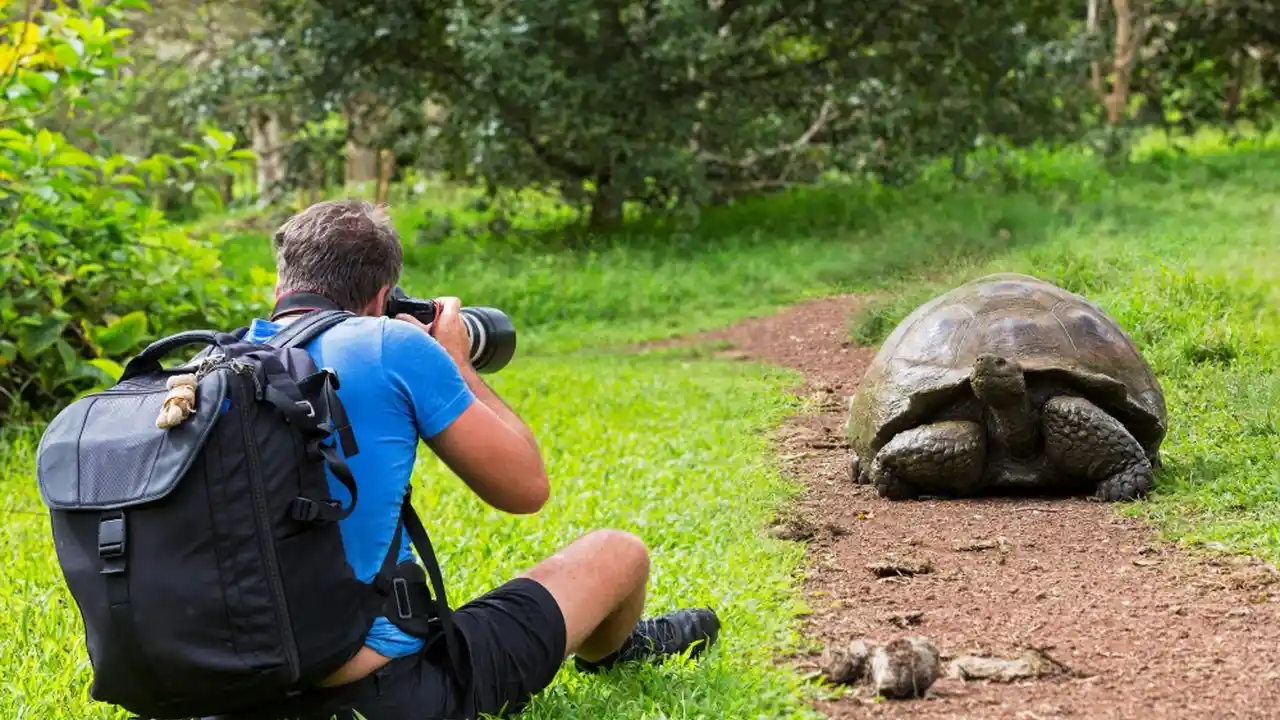
Cultural Photography Tips for Travelers
Capture the essence of local cultures with these photography tips. Document traditions and people respectfully.
Capture the essence of local cultures with these photography tips. Document traditions and people respectfully.
Cultural Photography Tips for Travelers
Hey fellow travelers and shutterbugs! Ever found yourself in a bustling market, a serene temple, or a vibrant festival, wishing you could truly capture the magic of the moment? Cultural photography isn't just about snapping a picture; it's about telling a story, respecting traditions, and bringing home memories that resonate. It's a beautiful way to connect with the places you visit and the people you meet. But how do you do it right? How do you get those authentic, respectful, and stunning shots that truly reflect the soul of a culture? Let's dive in!
Understanding Cultural Photography Ethics and Respectful Practices
Before we even talk about camera settings, let's talk about respect. This is paramount in cultural photography. You're entering someone else's world, and it's crucial to be mindful. Always ask for permission before taking someone's photo, especially if it's a close-up or if they are clearly the main subject. A simple gesture, a smile, or a few words in their local language (even if it's just 'photo, please?') can go a long way. If they say no, respect that immediately and move on. Don't be pushy or try to sneak a shot. Remember, you're a guest. In some cultures, people might believe a photograph steals their soul, or they might simply prefer not to be photographed for personal or religious reasons. Be aware of local customs. For instance, in many religious sites, photography might be restricted or forbidden in certain areas. Dress appropriately, be quiet, and observe before you shoot. Sometimes, the best shot is the one you don't take, but rather experience fully with your own eyes.
Another ethical consideration is how you use the photos. If you plan to publish them commercially, you'll likely need a model release form. Even for personal use, consider the impact your photos might have. Are you portraying the culture accurately and respectfully, or are you perpetuating stereotypes? Strive for authenticity and dignity in your portrayal.
Mastering Composition and Storytelling in Cultural Photography
Once you've got the ethical side covered, let's talk about making your photos sing. Composition is key to telling a compelling story. Don't just point and shoot. Think about what you want to convey. Are you capturing a moment of daily life, a grand architectural marvel, or the intricate details of a traditional craft?
- Rule of Thirds: This classic compositional guideline involves dividing your image into nine equal sections with two horizontal and two vertical lines. Place your subject or points of interest along these lines or at their intersections for a more balanced and engaging shot.
- Leading Lines: Use natural or man-made lines (roads, rivers, fences, architectural elements) to draw the viewer's eye towards your main subject. This adds depth and direction to your photos.
- Framing: Look for natural frames within your environment – doorways, windows, archways, or even tree branches – to frame your subject. This adds context and can create a sense of intimacy.
- Depth: Incorporate foreground, middle ground, and background elements to give your photos a sense of depth. This makes the image feel more immersive and three-dimensional.
- Capturing Emotion: The most powerful cultural photos often capture genuine emotion. Be patient, observe, and wait for those candid moments – a laugh, a thoughtful gaze, a moment of concentration.
- Details: Don't forget the small things! The intricate patterns on a textile, the weathered hands of a craftsman, the vibrant colors of spices in a market. These details add richness and authenticity to your cultural narrative.
Storytelling through your lens means thinking beyond a single shot. Consider creating a series of images that together paint a broader picture of the culture you're experiencing. This could be a sequence showing a traditional craft from start to finish, or a collection of portraits from a local festival.
Essential Camera Gear for Cultural Photography and Travel
While the best camera is always the one you have with you, having the right gear can certainly enhance your cultural photography. You don't need the most expensive equipment, but a few key items can make a big difference.
Recommended Cameras for Cultural Photography
- Mirrorless Cameras (e.g., Sony Alpha a7C, Fujifilm X-T5, Canon EOS R10): These are often lighter and more compact than DSLRs, making them ideal for travel. They offer excellent image quality, fast autofocus, and often have great video capabilities.
- DSLR Cameras (e.g., Nikon D7500, Canon EOS Rebel T8i): Still a solid choice for many photographers, DSLRs offer a wide range of lenses and robust build quality. They can be a bit heavier, but their optical viewfinders are preferred by some.
- High-End Compact Cameras (e.g., Sony RX100 series, Canon PowerShot G7 X Mark III): If you prioritize portability above all else, these cameras offer surprisingly good image quality in a pocket-friendly package. They're great for discreet street photography.
- Smartphones (e.g., iPhone 15 Pro Max, Samsung Galaxy S24 Ultra, Google Pixel 8 Pro): Don't underestimate your phone! Modern smartphones have incredible cameras, especially in good light. They're always with you, discreet, and perfect for quick candid shots.
Versatile Lenses for Cultural Photography
Your choice of lens will significantly impact your photos. For cultural photography, versatility is key.
- Standard Zoom Lens (e.g., 24-70mm f/2.8 or 24-105mm f/4): This is often considered the workhorse lens. It covers a wide range of focal lengths, from wide-angle for landscapes and street scenes to a short telephoto for portraits. The wider aperture (f/2.8) is great for low light and creating beautiful background blur.
- Prime Lens (e.g., 35mm f/1.8, 50mm f/1.8): A prime lens has a fixed focal length but typically offers a much wider aperture. This allows for excellent low-light performance and stunning bokeh (background blur), making them fantastic for portraits and capturing the atmosphere of dimly lit interiors. They also encourage you to 'zoom with your feet,' which can lead to more thoughtful compositions.
- Telephoto Zoom Lens (e.g., 70-200mm f/2.8 or 70-300mm f/4-5.6): Useful for capturing subjects from a distance without being intrusive, such as during ceremonies or wildlife encounters. It also compresses perspective, which can be creatively used.
Essential Accessories for Cultural Photography
- Extra Batteries: You don't want to run out of power in the middle of a once-in-a-lifetime moment. Always carry at least one spare, fully charged battery.
- Multiple Memory Cards: High-capacity cards are great, but having several smaller ones can be safer in case one gets corrupted.
- Lightweight Tripod or Monopod: For low-light situations, long exposures (e.g., night markets, cityscapes), or when you need extra stability. A travel tripod is usually compact and easy to carry.
- Camera Bag: A comfortable and secure bag that protects your gear from dust, moisture, and bumps. Look for one that doesn't scream 'expensive camera inside' to deter theft.
- Lens Cleaning Kit: Dust and smudges are inevitable. A blower, lens pen, and microfiber cloth are essential for keeping your lenses clean.
- Rain Cover: Weather can be unpredictable. A simple rain cover can protect your camera from unexpected downpours.
Comparing Photography Gear for Different Cultural Travel Scenarios
The 'best' gear really depends on your travel style and what you plan to photograph. Let's compare a few scenarios:
Scenario 1: Backpacking Through Southeast Asian Villages
Here, portability and discretion are paramount. You'll be walking a lot, often in crowded or dusty environments. You want something lightweight and not too flashy.
- Recommended Camera: Fujifilm X-T5 with a 23mm f/2 (35mm equivalent) prime lens.
- Why: The X-T5 is compact, has excellent image quality, and its retro styling makes it less intimidating than a large DSLR. The 23mm f/2 is a fantastic all-around lens for street photography, portraits, and capturing the general atmosphere. It's also weather-sealed, which is a bonus for humid climates.
- Alternative: Sony RX100 VII. Super pocketable, great image quality for its size, and a versatile zoom lens. Perfect for ultimate discretion.
- Price Range: Fujifilm X-T5 body (~$1,700 USD), 23mm f/2 lens (~$450 USD). Sony RX100 VII (~$1,200 USD).
- Use Case: Capturing candid moments of daily life, market scenes, portraits of locals, and vibrant street food. The smaller size allows you to blend in more easily.
Scenario 2: Exploring Ancient Ruins and Grand Temples in Europe or Asia
For architectural photography and capturing the grandeur of historical sites, you'll want good dynamic range and the ability to go wide.
- Recommended Camera: Canon EOS R6 Mark II with a Canon RF 15-35mm f/2.8L IS USM lens.
- Why: The R6 Mark II offers superb image quality, excellent low-light performance (crucial for dimly lit interiors), and a robust build. The 15-35mm f/2.8L is an incredibly sharp wide-angle zoom that's perfect for capturing expansive landscapes, intricate architecture, and large groups of people. The f/2.8 aperture is also great for blurring out distracting backgrounds if needed.
- Alternative: Nikon Z7 II with a Nikkor Z 14-30mm f/4 S lens. Slightly less expensive, but still offers excellent wide-angle performance and image quality.
- Price Range: Canon EOS R6 Mark II body (~$2,500 USD), RF 15-35mm f/2.8L lens (~$2,400 USD). Nikon Z7 II body (~$2,700 USD), Nikkor Z 14-30mm f/4 S lens (~$1,350 USD).
- Use Case: Capturing the scale and detail of ancient structures, frescoes, and large gatherings. The wide-angle allows you to get everything in frame, while the high resolution ensures details are preserved.
Scenario 3: Attending Vibrant Festivals and Cultural Performances
Here, speed, low-light capability, and the ability to capture action are important. You'll often be in dynamic, fast-moving environments.
- Recommended Camera: Sony Alpha a7 IV with a Sony FE 24-70mm f/2.8 GM II lens.
- Why: The a7 IV has excellent autofocus, high frame rates, and fantastic low-light performance, which is essential for evening performances or dimly lit festival areas. The 24-70mm f/2.8 GM II is a top-tier professional zoom lens that's incredibly sharp, fast, and versatile. It allows you to go wide for crowd shots and zoom in for performers.
- Alternative: Panasonic Lumix GH6 with a Leica DG Vario-Elmarit 12-60mm f/2.8-4 ASPH. POWER O.I.S. lens. While a Micro Four Thirds sensor, the GH6 excels in video and offers great image stabilization, which is useful for handheld shooting in dynamic environments.
- Price Range: Sony Alpha a7 IV body (~$2,500 USD), FE 24-70mm f/2.8 GM II lens (~$2,300 USD). Panasonic Lumix GH6 body (~$1,700 USD), Leica 12-60mm f/2.8-4 lens (~$1,000 USD).
- Use Case: Freezing fast-moving dancers, capturing the energy of a parade, or getting expressive portraits of participants. The fast aperture helps separate subjects from busy backgrounds.
Post-Processing Techniques for Enhancing Cultural Photos
Once you've captured your images, post-processing is where you can truly bring them to life. It's not about altering reality, but enhancing what was already there. Think of it as developing your film in a digital darkroom.
Key Post-Processing Software for Cultural Photography
- Adobe Lightroom Classic / Lightroom CC: The industry standard for photo organization and editing. It's powerful, intuitive, and offers a wide range of tools for color correction, exposure adjustments, sharpening, and noise reduction. Lightroom Classic is desktop-focused, while Lightroom CC is cloud-based.
- Adobe Photoshop: For more advanced retouching, compositing, and intricate edits. While Lightroom handles most needs, Photoshop is essential for pixel-level adjustments.
- Capture One Pro: A professional-grade alternative to Lightroom, known for its superior color handling and tethered shooting capabilities.
- Affinity Photo: A one-time purchase alternative to Photoshop, offering a robust set of features for a fraction of the cost.
- Snapseed (Mobile): A fantastic free mobile app for quick edits on the go. Great for enhancing smartphone photos before sharing.
Essential Editing Steps for Cultural Photography
- Exposure and Contrast: Adjust these to ensure your image isn't too dark or too bright, and that there's good separation between highlights and shadows.
- White Balance: Correct any color casts to make sure colors appear natural and true to life. This is especially important when shooting under mixed lighting conditions.
- Color Enhancement: Gently boost saturation and vibrance to make colors pop, but be careful not to overdo it, as it can make photos look unnatural.
- Sharpening and Noise Reduction: Sharpen details to make your subjects crisp, and reduce noise (graininess) that can appear in low-light photos.
- Cropping and Straightening: Improve composition by cropping out distractions and straightening horizons or vertical lines.
- Local Adjustments: Use brushes or radial/graduated filters to make specific adjustments to certain areas of your photo, such as brightening a face or darkening a distracting background element.
- Vignetting: A subtle vignette can draw the viewer's eye towards the center of the image, enhancing focus on your subject.
Remember, the goal of post-processing is to enhance, not to create something that wasn't there. Strive for a natural look that accurately represents the scene and the culture you experienced.
Sharing Your Cultural Photography and Building a Portfolio
You've captured amazing moments and carefully edited them – now it's time to share your work! Sharing your cultural photography is a great way to inspire others, educate about different cultures, and connect with a wider audience.
Platforms for Sharing Cultural Photography
- Instagram: A highly visual platform perfect for sharing individual photos and short stories. Use relevant hashtags to reach a broader audience interested in travel and culture.
- Flickr: A long-standing platform for photographers to share high-resolution images, connect with other photographers, and join groups focused on specific genres.
- 500px: Similar to Flickr, 500px is known for its high-quality photography community and discovery features.
- Your Own Website/Blog: The best way to have full control over your content and presentation. You can create galleries, write longer narratives about your experiences, and even sell prints.
- Travel Photography Contests: Many organizations host contests specifically for travel or cultural photography. This can be a great way to gain exposure and recognition.
- Local Exhibitions: Look for opportunities to display your work in local cafes, galleries, or community centers.
Tips for Building a Cultural Photography Portfolio
- Curate Your Best Work: Don't just dump every photo you've ever taken. Select only your strongest images that truly represent your style and the stories you want to tell.
- Tell a Story: Organize your portfolio thematically or by location to create a cohesive narrative. Each photo should contribute to a larger story.
- Show Variety: Include a range of shots – portraits, landscapes, street scenes, details – to demonstrate your versatility as a photographer.
- Seek Feedback: Share your portfolio with trusted friends, mentors, or online communities to get constructive criticism.
- Be Consistent: Maintain a consistent editing style across your portfolio to give it a professional and recognizable look.
- Write Captions: Don't just post photos. Write engaging captions that provide context, share anecdotes, and explain the cultural significance of what you've captured. This adds immense value to your work.
Remember, cultural photography is a journey, not a destination. Keep practicing, keep learning, and most importantly, keep exploring the world with an open mind and a respectful heart. Your camera is a powerful tool for connection and understanding, so use it wisely and creatively!
:max_bytes(150000):strip_icc()/277019-baked-pork-chops-with-cream-of-mushroom-soup-DDMFS-beauty-4x3-BG-7505-5762b731cf30447d9cbbbbbf387beafa.jpg)